
Menopause and the Climacteric: Understanding the Changes in Your Body
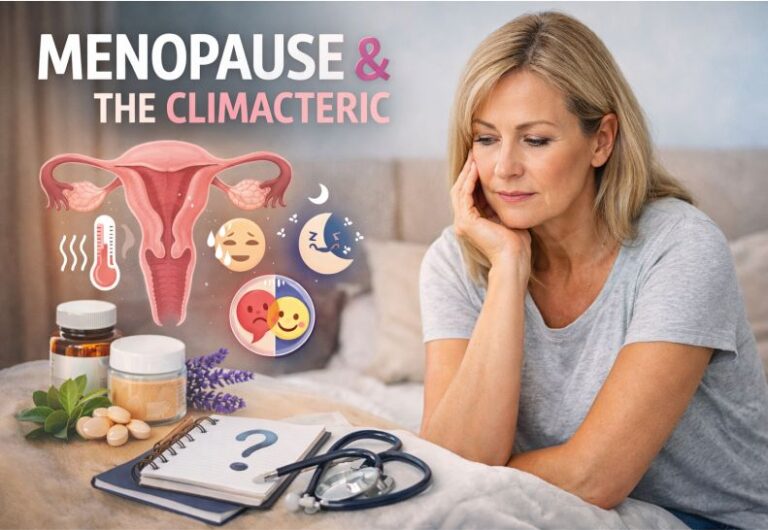
Every person who menstruates, especially women, tends to worry about the arrival of menopause and the climacteric. Because it is a delicate stage that brings significant changes to the body, the skin, and emotional well-being, it is essential to seek reliable information on how to navigate this period and deal with the natural transformations that occur.
To clarify the main questions about menopause and the climacteric, the blog invited dermatologist Dr. Hadassa Baron, who explains what happens during this phase and provides important guidance on how to face this time with greater confidence and understanding.
What Are Menopause and the Climacteric?
Menopause is the term given to a woman’s final menstrual period, usually occurring between the ages of 45 and 55, marking the end of the reproductive stage. At this point, the supply of eggs gradually becomes depleted, and there is a significant reduction in the production of female hormones.
The climacteric, on the other hand, is the transitional period between the fertile stage and the non-reproductive stage. It begins before menopause and may extend into postmenopause. During this time, the body undergoes several hormonal changes, which can lead to physical and emotional symptoms.
At What Age Do Menopause and the Climacteric Begin?
The climacteric usually begins around the age of 40. Menopause itself typically occurs between the ages of 45 and 55, depending on each individual’s body.
In some cases, menopause may occur before the age of 40 or 45 — this is known as early menopause. In these situations, the symptoms are similar to those of typical menopause, but ovulation stops earlier than expected. If you notice changes in your menstrual cycle or unusual symptoms, it is important to consult a gynecologist for proper evaluation.
When Do Menopause and the Climacteric End?
Menopause is a milestone — it occurs when a woman has her final menstrual period and ovulation permanently stops. The climacteric, however, is a broader process that begins before menopause and continues into the postmenopausal stage.
After the age of 40, it is common for the body to experience gradual changes, such as irregular menstrual cycles and variations in menstrual flow. These changes result from the decline in the production of female hormones, especially estrogen.
Dr. Hadassa Baron explains:
“Menopause is the term given to the final menstrual period. There is a period called the critical phase, which is the climacteric. It begins around age 40 and extends into postmenopause, meaning even after the last menstrual period. This is a phase in which women may experience several symptoms, marked by physical and emotional changes. This happens due to hormonal imbalance and the reduction in the production of female hormones by the ovaries. What occurs is irregular cycles, variation in menstrual flow, and a deficiency mainly in estrogen, which is one of the main consequences of menopause.”
Send us your questions or suggestions
For all products featured, results may vary. Please visit the product websites for further information.
These statements have not been evaluated by the FDA. These products are not intended to diagnose, treat, cure, or prevent any disease.
The information on this website is not intended as a substitute for professional medical advice. If you have, expect to have, or suspect you may have any medical condition, we recommend you consult with a physician.